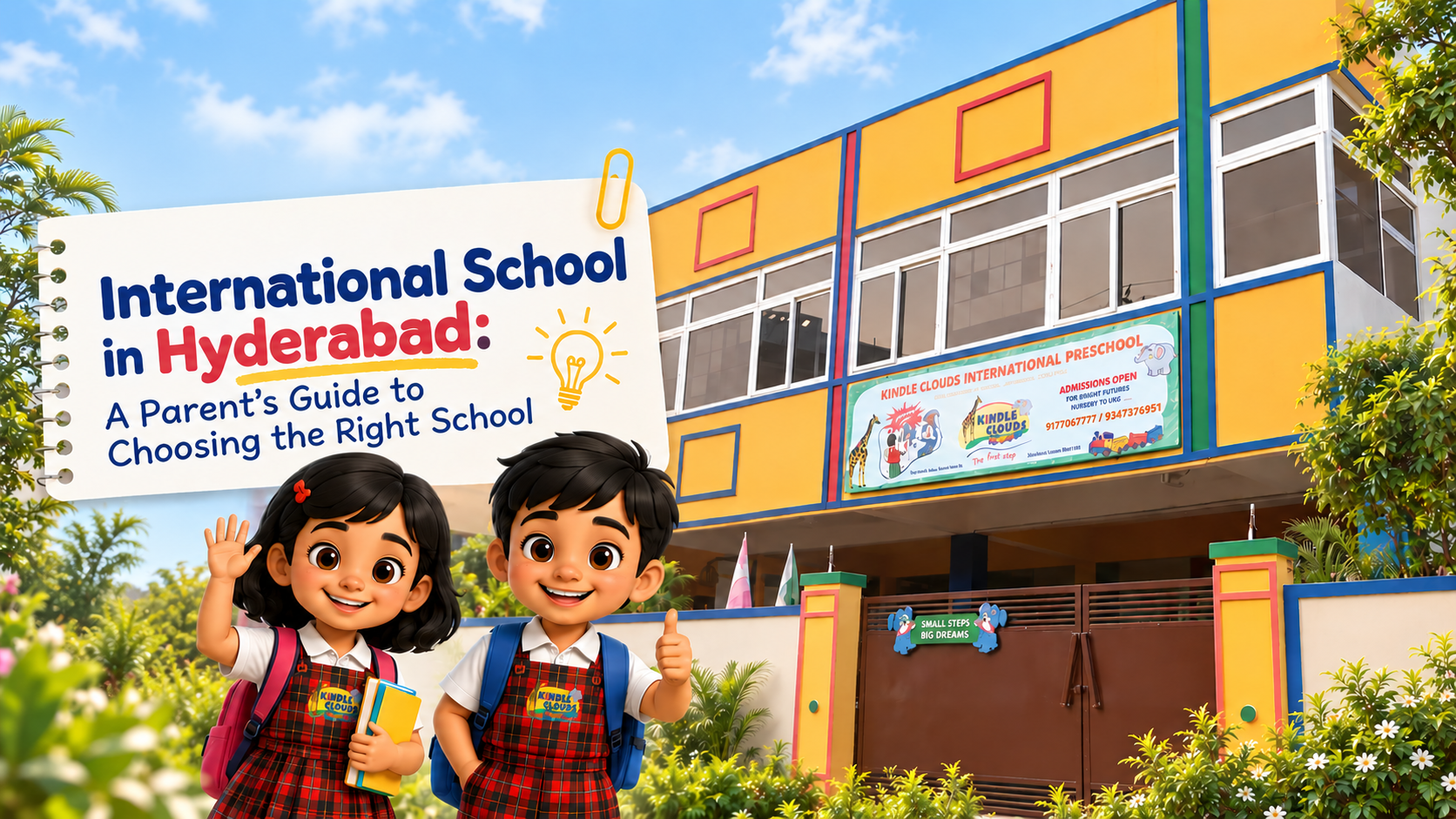
Choosing an [international school in Hyderabad](https://kindleclouds.in/admission) is an important decision for parents. A school is not only about academics; the learning environment, curriculum, teaching methods, activities, location, safety, and overall approach to a child's development also matter.
Hyderabad has schools offering different curricula and educational approaches, so comparing them can take time. Parents may also have questions about admissions, fees, age groups, facilities and the kind of learning their child will experience.
This guide explains the key factors parents should consider when exploring [international schools in Hyderabad](https://kindleclouds.in/programs), so you can compare your options and make a decision based on your child's needs.
What Is an International School?
An international school generally follows an internationally recognised curriculum or incorporates an international approach to education. Depending on the school, this may include curricula such as the International Baccalaureate (IB), Cambridge, or other recognised educational frameworks.
However, the word "international" alone does not tell you everything about a school. Two schools can have very different teaching methods, academic expectations, and learning environments.
Parents should therefore look beyond the name and understand what the school actually offers.
What Should Parents Look for in an International School in Hyderabad?
There is no single factor that determines whether a school is suitable for every child. A good starting point is to compare the following areas.
1. Curriculum and Teaching Approach
The curriculum influences what children learn and how they are assessed.
Parents should understand:
- Which curriculum or board the school follows
- How lessons are delivered
- How students are assessed
- Whether learning includes practical activities and projects
- How much emphasis is placed on independent thinking
For younger children, parents may also want to understand how much learning happens through activities, stories, play, and hands-on experiences.
2. Learning Environment
A child's experience at school is shaped by more than textbooks and examinations.
Look at whether the environment encourages children to:
- Ask questions
- Communicate their ideas
- Work with others
- Explore new interests
- Solve simple problems
- Take part in activities
A supportive learning environment can help children become comfortable with learning and participating in class.
3. Age Groups and Grade Levels
Before applying, check which age groups and grades the school accepts.
Some schools focus mainly on preschool and early years, while others continue through primary or secondary education.
Parents should check:
- Entry age requirements
- Available grades
- Admission timelines
- Whether the school has a pathway for continuing education
This is particularly important for families planning their child's education several years ahead.
International Schools in Hyderabad: Why Location Matters
Hyderabad is a large city, and daily travel can become an important part of a child's school experience.
Parents may explore schools in areas such as:
- Gachibowli
- Kondapur
- Madhapur
- Jubilee Hills
- Financial District
- Tellapur
- Nallagandla
- Kapra and surrounding areas
The nearest school is not necessarily the right choice, but the daily commute should be considered alongside curriculum, facilities and teaching approach.
A long journey every day may affect a young child's routine, especially when combined with school hours and extracurricular activities.
Facilities and Activities to Consider
When visiting an international school in Hyderabad, parents should look at the facilities that directly support children's learning and development.
Depending on the age group, these may include:
- Age-appropriate classrooms
- Activity and learning areas
- Library or reading spaces
- Sports and outdoor areas
- Creative activity spaces
- Technology-supported learning areas
- Safe pick-up and drop-off arrangements
Parents should also ask about extracurricular activities. Sports, art, music, public speaking and other activities can provide children with opportunities to explore interests outside regular classroom lessons.
Understanding Fees and Additional Costs
School fees are an important part of the decision, but parents should look at the complete cost rather than comparing only the advertised tuition fee.
Ask the school about:
- Admission or registration charges
- Tuition fees
- Transportation
- Books and learning materials
- Uniforms
- Activity charges
- Meals, if applicable
- Other annual or optional charges
Fee structures can differ considerably between schools, so it is useful to request the current fee details directly from the school before making a decision.
How Does the Admission Process Work?
The admission process varies between schools and grade levels.
Parents may need to complete an application, provide documents and, depending on the child's age and grade, attend an interaction or assessment.
Before applying, check:
- Application dates
- Age eligibility
- Required documents
- Admission procedure
- Availability of seats
- Fee payment schedule
It is also worth asking whether there are separate admission procedures for preschool, primary and higher grades.
International School vs Traditional School
Parents often compare international schools with schools following more traditional educational approaches.
The difference is not simply about one being better than the other. The right choice depends on the child's needs, the family's preferences and future education plans.
Instead of choosing based only on a school's label, parents should understand how its educational approach works in practice.
How to Choose the Right International School in Hyderabad
Once you have shortlisted a few international schools in Hyderabad, a school visit can help you understand the differences between them.
Visit the School
Photos and websites can provide useful information, but visiting the campus gives parents a better sense of the environment.
Observe:
- How classrooms are organised
- How children interact with teachers
- Whether learning spaces are age-appropriate
- General cleanliness and safety
- Available activity areas
Speak With the School Team
Prepare questions before your visit. Ask about the curriculum, teaching methods, student activities, admissions and fees.
You can also ask how the school communicates with parents about a child's progress.
Think About Your Child
Every child has different interests and learning needs.
Consider whether your child would benefit from:
- More hands-on activities
- Structured academic learning
- Creative activities
- Sports
- Communication opportunities
- Group-based learning
- Individual attention
The goal is to find an environment that fits your child's current stage and your family's educational expectations.
Kindle Clouds: An Early Learning and Schooling Option in Hyderabad
For parents exploring school options in Hyderabad, Kindle Clouds provides programs covering early learning and primary education.
Its programs include Playgroup, Nursery, LKG, UKG and Grades 1–5, along with a Day Care program. The school also focuses on areas such as play-based learning, activity-based experiences and children's overall development.
Parents considering Kindle Clouds can review the available programs, understand the learning approach and contact the school directly for current admission information.
As with any school, it is useful to visit the campus, ask questions and compare the program with your child's needs before making a decision.
Questions Parents Should Ask Before Selecting a School
Before finalising an international school in Hyderabad, consider asking:
- Which curriculum does the school follow?
- What age groups and grades are available?
- What is the school's teaching approach?
- How are children assessed?
- What activities are available outside academics?
- What safety measures are in place?
- How does the school communicate with parents?
- What is included in the school fee?
- What additional costs should parents expect?
- What is the admission process?
Having these answers in advance makes it easier to compare schools objectively.
Frequently Asked Questions
Which curriculum should I choose for my child?
There is no single curriculum that suits every family. Parents should compare the curriculum, teaching approach, assessment methods and their child's future education plans before deciding.
How much do international schools in Hyderabad charge?
Fees vary by school, curriculum, grade and facilities. Parents should request the current fee structure directly from each school and check for additional charges beyond tuition.
At what age can children start international schooling?
The starting age depends on the school and program. Preschool programs may have different age requirements from primary school admissions, so parents should check the school's current eligibility criteria.
How can I compare international schools in Hyderabad?
Compare curriculum, teaching approach, location, age groups, facilities, activities, safety, fees and admission requirements. A campus visit can also help you understand the learning environment.
Is location important when choosing a school?
Yes. Daily travel can affect a child's routine, so parents should consider commute time along with the school's educational approach and facilities.
What should I ask during a school visit?
Ask about curriculum, classroom practices, teacher interaction, activities, safety, fees, communication with parents and the admission process. It is also helpful to observe the classrooms and activity areas.
Final Thoughts
Finding the right [international school in Hyderabad](https://kindleclouds.in/#home) requires more than looking at a school's name or curriculum. Parents should consider the complete experience, including teaching methods, learning environment, location, activities, fees, safety and admission requirements.
Take time to compare your shortlisted schools, visit the campuses and ask questions that relate specifically to your child's needs. A thoughtful comparison can help your family choose a school environment where your child can learn, participate and grow with confidence.
FactorWhat Parents Can Compare: Curriculum: Board or curriculum followed by the schoolTeachingClassroom, activity-based or project-based approachesAssessmentTests, projects, observations or other methodsActivitiesSports, arts, communication and extracurricular opportunitiesLearning environmentClassroom culture and student participationFuture plansCompatibility with the family's longer-term education goals